




5 Proven Healthcare Robotics Solutions That Are Transforming Hospitals
June 18, 2026
How Autonomous Robots See the World: LIDAR, SLAM and Sensor Fusion Explained
June 18, 2026
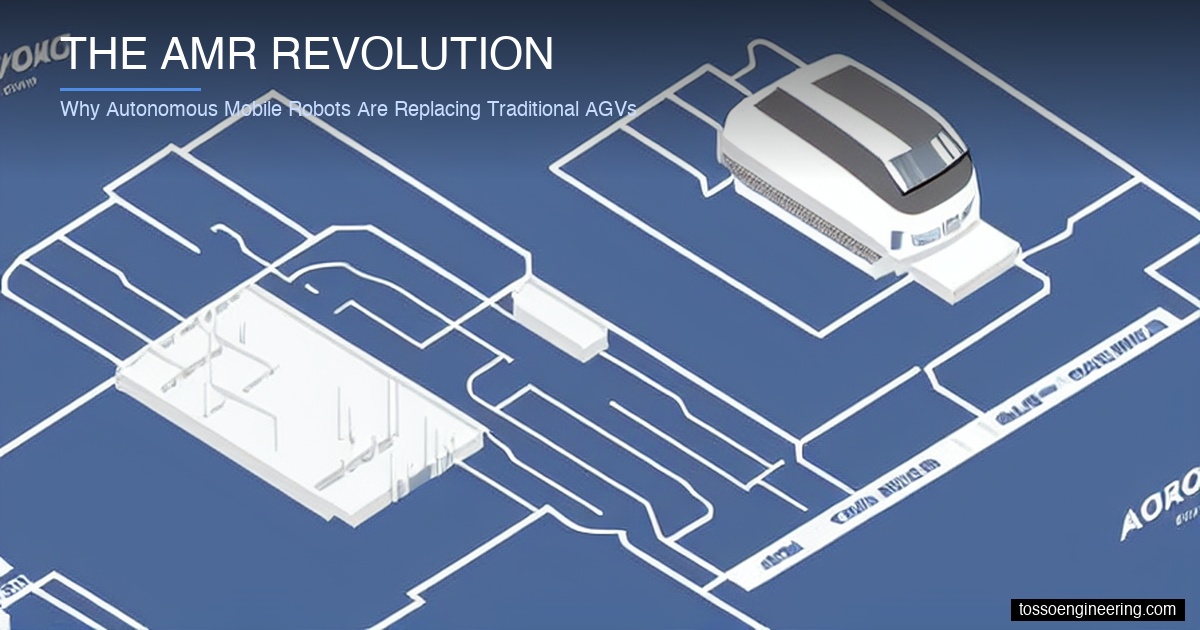
For decades, warehouses and factories relied on automated guided vehicles following fixed paths marked by magnetic strips, wires or painted lines. These systems worked, but they were rigid, expensive to modify and blind to their surroundings. A single obstacle on the track meant a complete stop until someone cleared the path. Today, a new generation of autonomous mobile robots is fundamentally changing how materials move through industrial environments, and the difference is not incremental — it is transformative.
An autonomous mobile robot does not follow a fixed path. It perceives its environment in real time, builds a map of the facility, plans routes dynamically and adapts to changes without human intervention. When a pallet is left in the middle of an aisle, the AMR simply routes around it. When a new workstation is added to the floor, the robot incorporates it into its map without any infrastructure modification. This flexibility is why autonomous mobile robots are displacing traditional AGVs across manufacturing, logistics, healthcare and retail at an accelerating pace.
Table of Contents
- AGV vs AMR: Understanding the Fundamental Difference
- How Autonomous Mobile Robots Navigate and Make Decisions
- SLAM Technology: The Brain Behind Autonomous Navigation
- The Warehouse Transformation
- Manufacturing Floor Applications
- T-Truck: Tosso Engineering’s Autonomous Mobile Robot
- Fleet Management and Multi-Robot Coordination
- Integration with Existing Systems
- Safety Systems and Human-Robot Collaboration
- Economics of AMR Deployment
- Where Autonomous Mobile Robots Are Heading
- Frequently Asked Questions
AGV vs AMR: Understanding the Fundamental Difference
The distinction between automated guided vehicles (AGVs) and autonomous mobile robots (AMRs) is not just technical — it represents two fundamentally different philosophies of automation.
An AGV is essentially a driverless cart that follows a predetermined path. It uses magnetic strips embedded in the floor, wires under the concrete, reflective tape on walls or laser targets mounted on pillars. The vehicle knows where to go because the infrastructure tells it. If you want to change the route, you dig up the floor, lay new wires and recalibrate the system. This process can take weeks and cost tens of thousands of dollars.
An autonomous mobile robot works the opposite way. Instead of relying on external infrastructure, it carries its own perception system — typically a combination of LIDAR sensors, cameras, encoders and inertial measurement units. The robot builds a map of its environment, localizes itself within that map and plans optimal routes in real time. When you want to change the workflow, you update the map through software and the robot adapts immediately.
This difference has profound implications for flexibility, scalability and total cost of ownership. A facility using autonomous mobile robots can reconfigure its layout, add new destinations, change traffic patterns and scale the fleet up or down based on demand — all without physical infrastructure changes. Wikipedia’s article on autonomous mobile robots provides a comprehensive technical overview of the underlying technologies.
Key Differences at a Glance
| Characteristic | Traditional AGV | Autonomous Mobile Robot |
|---|---|---|
| Navigation | Fixed paths (wires, magnets, tape) | Dynamic mapping (LIDAR, SLAM) |
| Obstacle Response | Stop and wait | Reroute automatically |
| Route Changes | Physical infrastructure modification | Software update |
| Deployment Time | Weeks to months | Days to weeks |
| Scalability | Linear cost increase | Near-linear with fleet management |
| Environment | Controlled, structured | Dynamic, mixed human-robot |
| Maintenance | Infrastructure + vehicle | Vehicle only |
How Autonomous Mobile Robots Navigate and Make Decisions
An autonomous mobile robot is a complex system that integrates multiple technologies into a cohesive platform capable of independent operation. Understanding how these components work together explains why AMRs are so much more capable than their predecessors.
Perception Layer
The robot’s perception system is its eyes and ears. A typical AMR carries multiple sensor types that work together to create a comprehensive understanding of the environment:
- LIDAR (Light Detection and Ranging): Emits laser pulses and measures their return time to create precise 360-degree distance maps. This is the primary navigation sensor for most autonomous mobile robots, providing accurate ranging even in challenging lighting conditions.
- Cameras: Provide visual data for object recognition, barcode reading, traffic sign detection and visual localization. Modern AMRs use stereo cameras for depth perception.
- Ultrasonic Sensors: Detect close-range obstacles that LIDAR might miss, particularly in the immediate vicinity of the robot where safety is critical.
- Wheel Encoders: Track wheel rotation to estimate distance traveled and maintain odometry between LIDAR scans.
- Inertial Measurement Unit (IMU): Measures acceleration and rotation to detect slopes, bumps and orientation changes.
Decision Layer
The robot’s onboard computer processes sensor data in real time, running multiple algorithms simultaneously:
- Localization: Determining exactly where the robot is within the facility map, accurate to within a few centimeters
- Path Planning: Calculating the optimal route from current position to destination, considering traffic, congestion and priority
- Obstacle Avoidance: Detecting and responding to static and dynamic obstacles in real time
- Traffic Management: Coordinating with other robots to prevent deadlocks and optimize flow
- Battery Management: Monitoring charge levels and autonomously returning to charging stations when needed
Actuation Layer
The physical systems that move the robot and interact with the environment include drive motors, lifting mechanisms, payload platforms and safety systems. Tosso Engineering’s T-Truck uses a differential drive system with high-torque motors capable of handling payloads up to 500 kg.
SLAM Technology: The Brain Behind Autonomous Navigation
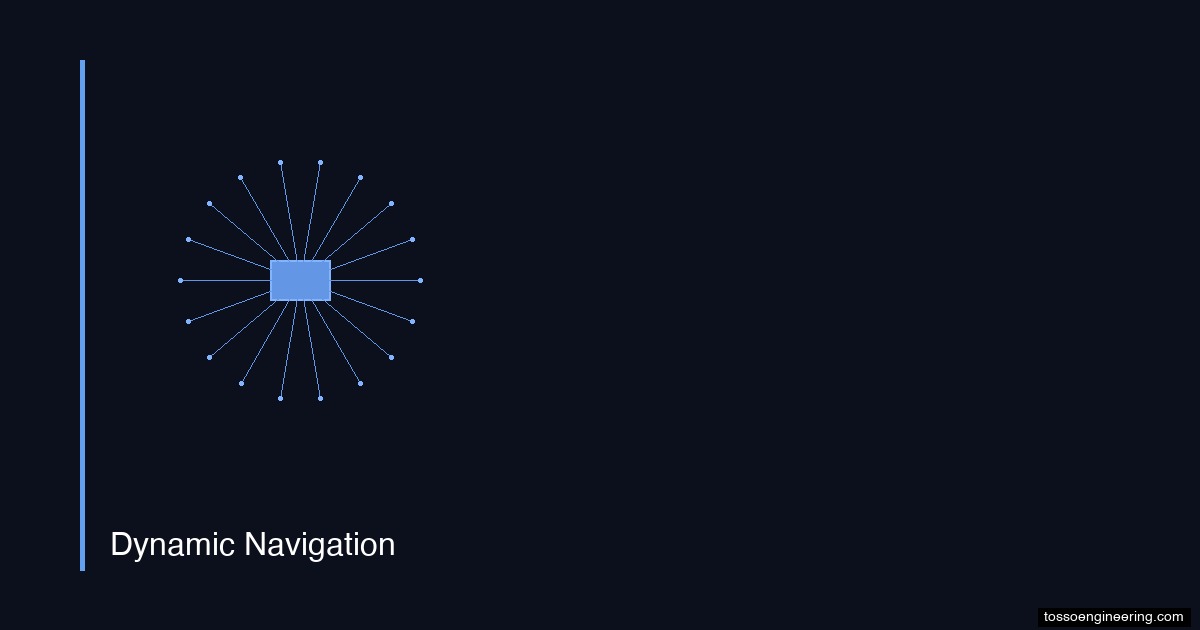
Simultaneous Localization and Mapping (SLAM) is the core algorithm that makes autonomous mobile robots possible. Without SLAM, a robot cannot know where it is or understand its surroundings. With SLAM, the robot can explore an unknown environment, build a detailed map and continuously track its position within that map.
How SLAM Works
SLAM solves a chicken-and-egg problem: to build a map, you need to know your position, but to know your position, you need a map. SLAM algorithms solve both problems simultaneously by:
- Scanning the environment with LIDAR to capture distance measurements in all directions
- Extracting features from the scan data — walls, corners, pillars, furniture and other distinctive elements
- Matching features between consecutive scans to estimate the robot’s movement
- Updating the map with new information while correcting accumulated drift errors
- Optimizing the map using loop closure — recognizing when the robot returns to a previously visited location and aligning the map accordingly
The result is a precise, continuously updated map of the facility that the robot can navigate with centimeter-level accuracy. When T-Truck is deployed in a new facility, it performs an initial mapping run, exploring the environment and building its navigation map. This process typically takes a few hours for a medium-sized warehouse.
Dynamic Environment Handling
Unlike static maps, SLAM-based systems continuously update their understanding of the environment. When new obstacles appear — pallets, forklifts, people or temporary barriers — the robot detects them in real time and adjusts its path. When obstacles are removed, the map returns to its original state. This dynamic handling is what makes autonomous mobile robots fundamentally more flexible than AGVs.
The Warehouse Transformation
Warehousing is the sector where autonomous mobile robots have had the most visible impact. The explosive growth of e-commerce has created unprecedented demands on warehouse operations — faster order fulfillment, higher throughput, greater accuracy and the ability to handle seasonal volume spikes without proportional labor increases.
The E-Commerce Challenge
A modern e-commerce warehouse might process tens of thousands of orders per day, each containing different items picked from different locations. Traditional person-to-goods picking, where workers walk the aisles to collect items, is slow and physically demanding. Goods-to-person systems using autonomous mobile robots reverse this equation — the robots bring the shelves to the picker, eliminating walking time and reducing picker fatigue.
The economics are compelling. A single autonomous mobile robot can replace the walking time of multiple pickers, operating continuously without breaks. During peak seasons, additional robots can be deployed temporarily to handle volume spikes, then returned to storage when demand normalizes. This elasticity is impossible with fixed infrastructure AGVs or manual labor.
Material Transport
Beyond picking, autonomous mobile robots handle inbound receiving, putaway, replenishment, packing station transport and outbound shipping. T-Truck excels in these applications with its 500 kg payload capacity and ability to navigate narrow aisles and busy loading docks.
Manufacturing Floor Applications
In manufacturing environments, autonomous mobile robots serve as the connective tissue between workstations, replacing fixed conveyors and manual material handling with flexible, reconfigurable transport systems.
Just-in-Time Material Delivery
AMRs deliver raw materials and components to production lines exactly when they are needed, reducing work-in-progress inventory and freeing floor space. The robot receives delivery requests from the manufacturing execution system (MES), picks up materials from the warehouse and delivers them to the correct workstation with precise timing.
WIP Transport Between Stations
In multi-stage production processes, work-in-progress must move between stations efficiently. Autonomous mobile robots replace fixed conveyor systems with flexible routes that can be reconfigured as production requirements change. When a new product variant requires a different production sequence, the AMR fleet adapts through software rather than hardware modification.
Finished Goods Movement
Completed products are transported from the final production station to packaging, quality inspection and shipping areas. This final-mile transport within the facility is a natural fit for autonomous mobile robots, which can navigate the transition zones between production and logistics areas safely.
T-Truck: Tosso Engineering’s Autonomous Mobile Robot

T-Truck is Tosso Engineering’s autonomous mobile robot platform, designed from the ground up for industrial material transport in factories, warehouses and logistics centers. Every aspect of T-Truck’s design reflects the practical requirements of real-world deployment.
Navigation and Perception
T-Truck uses a multi-sensor fusion approach combining LIDAR, cameras and inertial sensors for robust navigation in dynamic environments. The SLAM algorithm builds and continuously updates a precise facility map, enabling centimeter-level positioning accuracy even in areas with limited features or changing conditions.
Payload and Physical Design
With a 500 kg payload capacity, T-Truck handles the heavy material transport tasks that would otherwise require forklifts or multiple manual workers. The compact footprint allows operation in narrow aisles common in European and Turkish warehouses. The low-profile design provides stability under load while maintaining a small visual footprint that does not obstruct human workers.
Integration Capabilities
T-Truck connects with warehouse management systems (WMS), enterprise resource planning (ERP) systems and manufacturing execution systems (MES) through standard APIs. This integration enables automated task assignment, real-time status reporting and coordination with other facility systems.
Key Specifications
- Navigation: LIDAR-based SLAM with dynamic obstacle avoidance
- Payload: Up to 500 kg
- Speed: Adjustable based on environment and load
- Battery: Long-life lithium battery with automatic charging
- Safety: Multi-layer safety system with emergency stop, collision avoidance and speed limiting
- Connectivity: WiFi, Bluetooth and optional 5G for real-time fleet communication
- API: RESTful API for WMS, ERP and MES integration
Fleet Management and Multi-Robot Coordination
A single autonomous mobile robot delivers value, but the real transformation happens when multiple robots work together as a coordinated fleet. Fleet management systems enable centralized control, task optimization and intelligent resource allocation across the entire robot population.
Task Assignment and Optimization
When a transport request is generated — whether from a WMS order, an MES production signal or a manual request — the fleet management system assigns it to the most appropriate robot based on proximity, current task status, battery level and priority. This optimization ensures maximum fleet utilization and minimum response times.
Traffic Coordination
Multiple autonomous mobile robots sharing the same space must coordinate to prevent deadlocks, congestion and collisions. Fleet management systems implement traffic rules, priority protocols and dynamic path planning that allow dozens of robots to operate safely in shared spaces without human intervention.
Scalability
Fleet management enables near-linear scalability. Adding more robots to the fleet increases throughput proportionally, with the management system handling coordination automatically. Tosso Engineering designs T-Truck deployments with scalability in mind, ensuring that initial installations can grow as business requirements evolve.
Integration with Existing Systems
One of the most important advantages of autonomous mobile robots over traditional AGVs is their ability to integrate with existing facility systems through software rather than hardware. Remote-C provides an additional layer of remote monitoring and control capability.
WMS Integration
Warehouse management systems generate transport tasks based on orders, replenishment rules and optimization algorithms. T-Truck’s API receives these tasks, executes them autonomously and reports completion status back to the WMS in real time.
ERP Integration
Enterprise resource planning systems benefit from real-time visibility into material movement. AMR fleet data — transport volumes, cycle times, utilization rates — feeds into ERP dashboards for operational planning and performance monitoring.
MES Integration
In manufacturing environments, the manufacturing execution system coordinates production sequences and material requirements. T-Truck integrates with MES platforms to deliver materials to production lines precisely when needed, supporting just-in-time manufacturing principles.
Safety Systems and Human-Robot Collaboration
Autonomous mobile robots operate in environments shared with human workers, making safety a critical design consideration. Modern AMRs implement multiple layers of safety to ensure that human-robot collaboration is safe, predictable and comfortable.
Obstacle Detection and Avoidance
The primary safety system uses LIDAR to continuously scan the environment and detect obstacles — including people — in the robot’s path. When an obstacle is detected, the robot slows down, stops or reroutes depending on the distance and situation. The detection zone extends in all directions around the robot.
Emergency Stop
Physical emergency stop buttons on the robot allow any worker to immediately halt the robot. The emergency stop is also triggered automatically if the safety system detects a critical situation that cannot be resolved through normal obstacle avoidance.
Speed Limiting
Autonomous mobile robots adjust their speed based on the environment. In open areas with clear sightlines, the robot moves at full speed. In narrow aisles, near human workstations or in high-traffic zones, it reduces speed to ensure safe operation. Speed limits are configurable by zone.
Predictable Behavior
Safety is not just about stopping — it is about predictability. Workers need to understand how the robot will behave so they can work alongside it confidently. T-Truck follows consistent, predictable movement patterns that workers quickly learn to anticipate.
Economics of AMR Deployment
The financial case for autonomous mobile robots is strong and getting stronger as technology costs decrease and labor costs increase. Understanding the full economic picture helps facility managers make informed investment decisions.
Direct Cost Savings
The most visible savings come from reduced labor requirements for material transport. A single T-Truck can replace the equivalent of multiple full-time material handlers, operating 24/7 without breaks, overtime or benefits. The robot also eliminates forklift requirements for many transport tasks, reducing fuel costs, maintenance and insurance.
Indirect Benefits
Beyond direct labor savings, autonomous mobile robots deliver value through:
- Reduced product damage from more consistent handling
- Better space utilization through optimized traffic patterns
- Improved inventory accuracy through automated tracking
- Reduced workplace injuries and associated costs
- Higher throughput without proportional labor increases
- Ability to scale operations during peak periods without hiring temporary workers
Deployment Costs
Unlike AGV deployments that require significant infrastructure investment (floor modifications, guide wires, reflectors), autonomous mobile robot deployments are primarily software and robot costs. The typical payback period for an AMR deployment is 12 to 24 months, with ongoing savings that compound as the fleet scales.
Where Autonomous Mobile Robots Are Heading
The autonomous mobile robot market is evolving rapidly, driven by advances in AI, sensor technology and computing power. Several trends are shaping the next generation of AMR capabilities.
Deeper AI Integration
Future autonomous mobile robots will use more sophisticated AI for decision making, including predictive routing based on traffic patterns, learning from past deployments to optimize behavior and adapting to seasonal or cyclical changes in facility operations.
Multi-Modal Robots
The distinction between transport robots, picking robots and manipulation robots is blurring. Future AMRs will combine transport capability with robotic arms, allowing them to pick items, load shelves and perform simple assembly tasks in addition to material movement.
Cloud-Based Fleet Intelligence
While current fleet management is often facility-local, the trend is toward cloud-based platforms that aggregate data across multiple sites, enabling cross-facility optimization, predictive maintenance and continuous improvement through machine learning.
Collaborative Autonomy
Future systems will feature tighter collaboration between autonomous mobile robots and human workers, with robots that understand human intent, respond to gestures and voice commands and adapt their behavior to support human workflows rather than disrupting them.
McKinsey’s analysis of warehouse automation projects that autonomous mobile robots will handle over 25% of all warehouse material movement by 2030, up from less than 5% today. Statista’s robotics market data confirms the accelerating adoption trend across all industrial sectors.
Conclusion
The transition from traditional AGVs to autonomous mobile robots represents one of the most significant shifts in industrial automation. The flexibility, scalability and intelligence of AMR technology make it the clear choice for facilities that need to adapt quickly to changing demands without massive infrastructure investments.
T-Truck by Tosso Engineering embodies this new generation of autonomous mobile robots — intelligent, flexible, safe and designed for the real-world demands of modern manufacturing and logistics. With LIDAR-based SLAM navigation, 500 kg payload capacity and seamless integration with existing facility systems, T-Truck delivers immediate value with a clear path to scaling.
To discuss how autonomous mobile robots can transform your facility’s material handling operations, book a 1:1 consultation with our engineering team. You can also explore our complete range of robotic solutions including Remote-C for remote fleet control and Tossoduino for IoT integration.
Frequently Asked Questions
What is the difference between an autonomous mobile robot and an AGV?
An AGV follows fixed paths defined by magnetic strips, wires or reflectors installed in the facility. An autonomous mobile robot uses LIDAR and SLAM technology to build its own map and navigate dynamically, rerouting around obstacles and adapting to changes without any infrastructure modifications. AMRs are more flexible, faster to deploy and easier to scale than traditional AGVs.
How do autonomous mobile robots avoid obstacles?
Autonomous mobile robots use LIDAR sensors to continuously scan their environment in all directions. When an obstacle is detected — whether a pallet, forklift or person — the robot calculates an alternative route in real time and navigates around the obstacle without stopping. If no alternative route exists, the robot stops safely and waits for the path to clear.
How long does it take to deploy autonomous mobile robots in a warehouse?
Initial deployment of an autonomous mobile robot like T-Truck typically takes 1-2 weeks, including environment mapping, system integration and staff training. The robot performs an autonomous mapping run to build its navigation database, then begins operating immediately. Compare this to AGV deployments that can take months due to infrastructure installation requirements.
Can autonomous mobile robots work alongside human workers?
Yes. Modern autonomous mobile robots are specifically designed for safe human-robot collaboration. They use multi-layer safety systems including LIDAR-based obstacle detection, emergency stop buttons, speed limiting in human-occupied zones and predictable movement patterns. Workers quickly learn to anticipate robot behavior and operate safely in shared spaces.
What is the return on investment for autonomous mobile robots?
Most facilities achieve positive ROI within 12 to 24 months of deploying autonomous mobile robots. Savings come from reduced labor costs, lower product damage, improved throughput, reduced workplace injuries and the ability to scale operations during peak periods without hiring additional staff. The exact payback period depends on facility size, labor costs and operational complexity.
How many autonomous mobile robots do I need for my facility?
The number of robots depends on facility size, transport volume, distance between points and required throughput. A typical medium-sized warehouse might start with 3-5 robots and scale based on measured performance. Tosso Engineering provides fleet sizing analysis as part of the consultation process, helping you determine the optimal fleet size for your specific requirements.