


7 Proven Robotic Engineering Solutions That Transform Industrial Operations
June 10, 2026
5 Proven Healthcare Robotics Solutions That Are Transforming Hospitals
June 18, 2026
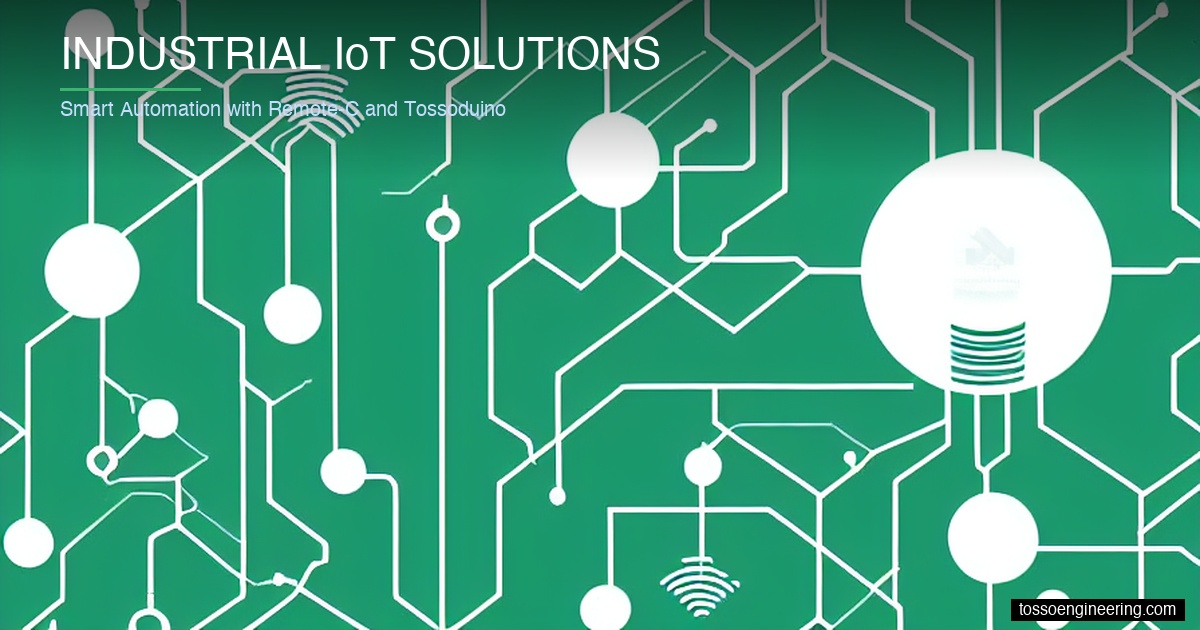
Industrial IoT solutions are transforming how businesses monitor, control and optimize their operations. By connecting machines, sensors and control systems through intelligent networks, companies gain real-time visibility into every aspect of their production and logistics workflows. The Industrial Internet of Things (IIoT) represents a fundamental shift from reactive to predictive operations, enabling data-driven decision making at every level of the organization.
Unlike consumer IoT, which focuses on convenience and lifestyle, industrial IoT solutions must deliver reliability, low latency, security and scalability in demanding environments. Tosso Engineering develops purpose-built IoT platforms that meet these requirements, offering both hardware and software solutions designed for industrial-grade deployments across manufacturing, logistics, healthcare and energy sectors.
Table of Contents
- What Are Industrial IoT Solutions?
- Why Industrial IoT Matters
- Solution 1: Real-Time Monitoring
- Solution 2: Predictive Maintenance
- Solution 3: Energy Optimization
- Solution 4: Quality Control
- Solution 5: Remote Operations
- Solution 6: Fleet Management
- Solution 7: Digital Twins
- Tosso Engineering’s IoT Platform
- Industrial IoT Use Cases
- Key Technologies
- How to Implement
- Frequently Asked Questions
What Are Industrial IoT Solutions?
Industrial IoT solutions combine sensors, actuators, communication protocols and cloud platforms to create connected systems that collect, transmit and analyze operational data. These systems enable remote monitoring, predictive maintenance, process optimization and autonomous decision making across industrial environments.
A typical industrial IoT architecture includes:
- Edge Devices: Sensors, controllers and gateways that collect data at the source. Tossoduino serves as a versatile edge device for both prototyping and production deployments in industrial environments.
- Connectivity Layer: Industrial protocols such as MQTT, OPC-UA, Modbus, LoRaWAN and 5G that transmit data reliably in harsh industrial conditions with minimal latency.
- Data Processing: Edge computing for real-time analysis and cloud platforms for historical data storage, pattern recognition and advanced analytics.
- Application Layer: Dashboards, alerts, machine learning models and automation rules that turn raw sensor data into actionable operational insights.
- Remote Control: Remote-C enables operators to control equipment and robots from any location with ultra-low latency and secure communication.
Why Industrial IoT Solutions Matter for Modern Businesses
The global industrial IoT market is projected to exceed $1.1 trillion by 2028, driven by the need for operational efficiency, predictive capabilities and autonomous systems. Companies that implement industrial IoT solutions achieve significant competitive advantages through reduced costs, improved quality and faster response times.
Key drivers of IIoT adoption include the pressure to reduce operational costs, the need for real-time visibility into production processes, growing complexity of supply chains and the demand for predictive rather than reactive maintenance strategies.
Solution 1: Real-Time Monitoring and Visibility
Industrial IoT solutions provide instant visibility into machine performance, environmental conditions, energy consumption and production output. Sensors deployed throughout the facility collect data continuously, transmitting it to centralized dashboards where operators can monitor key performance indicators in real time.
Real-time monitoring enables proactive decision making. Instead of discovering problems after they cause downtime, operators receive alerts when parameters deviate from normal ranges. This allows intervention before minor issues escalate into major failures. Remote-C extends this capability to remote locations, allowing managers to monitor operations from anywhere.
Solution 2: Predictive Maintenance
By analyzing vibration patterns, temperature trends, power consumption and other sensor data, industrial IoT solutions can predict equipment failures days or weeks before they occur. This shift from reactive to predictive maintenance reduces unplanned downtime by up to 50% and extends equipment lifespan by 20-40%.
Predictive maintenance algorithms learn the normal operating signature of each machine and detect anomalies that indicate developing problems. Maintenance teams can then schedule repairs during planned downtime, avoiding costly emergency interventions and production interruptions.
Solution 3: Energy Optimization
Smart sensors and analytics platforms identify energy waste, optimize HVAC systems and schedule equipment operation during off-peak hours. Industrial facilities typically achieve 10-30% energy savings through IoT-driven optimization, translating to significant cost reductions and improved sustainability metrics.
Industrial IoT solutions track energy consumption at the machine, line and facility level. This granular visibility reveals hidden waste, identifies inefficient equipment and enables data-driven decisions about equipment upgrades and process changes.
Solution 4: Quality Control and Traceability
IoT-enabled quality monitoring detects defects in real time, triggers automated rejection of faulty products and maintains complete traceability records for regulatory compliance. Vision systems, precision sensors and machine learning algorithms work together to ensure consistent product quality.
Every product can be tracked from raw material to finished goods, with complete data about processing conditions, machine parameters and inspection results. This level of traceability is essential for industries with strict regulatory requirements such as automotive, pharmaceutical and food manufacturing.
Solution 5: Remote Operations and Control
With Remote-C technology, operators can monitor and control equipment from centralized control rooms or any remote location. This capability enables 24/7 oversight without requiring staff on-site at all times.
Remote-C capabilities include:
- Ultra-Low Latency: Sub-100ms control response for real-time operations
- Multi-Device Control: Manage multiple robots and machines from a single interface
- Video Streaming: Real-time camera feeds for visual monitoring and teleoperation
- Secure Communication: Encrypted data transmission with role-based access control
- Fail-Safe Design: Automatic safety protocols in case of connection loss
Solution 6: Fleet Management and Coordination
Industrial IoT solutions enable centralized management of robot and vehicle fleets. T-Truck autonomous transport robots coordinate through IoT networks to optimize material flow, avoid congestion and maximize throughput across the facility.
Fleet management systems track the location, status and task progress of every robot in real time. They automatically assign tasks based on proximity, battery level and availability. When a robot needs charging, it returns to its station and the system reassigns its tasks to other units.
Solution 7: Digital Twins and Simulation
Digital twin technology creates virtual replicas of physical assets, production lines and entire facilities. These digital models are continuously updated with real-time data from IoT sensors, enabling simulation, testing and optimization without disrupting actual operations.
Industrial IoT solutions with digital twin capabilities allow engineers to test process changes, predict outcomes and optimize configurations in a virtual environment before implementing them in the real world. This reduces risk, accelerates innovation and improves decision quality.
Tosso Engineering’s Industrial IoT Platform
Tosso Engineering offers a complete industrial IoT ecosystem with hardware, software and integration services designed for demanding industrial environments.
Remote-C: Industrial Remote Control System
Tosso Remote-C is an advanced remote control platform for industrial applications. It provides secure, low-latency control of robots, vehicles and automation equipment from any location. The system supports multiple communication protocols and integrates with existing industrial infrastructure.
Tossoduino: IoT Prototyping and Production Platform
Tossoduino is a flexible IoT controller platform that bridges the gap between prototyping and production. Engineers can develop and test IoT applications rapidly, then deploy them in industrial environments without redesign. Applications include environmental monitoring, machine status tracking, energy metering and custom sensor networks.
T-Truck: IoT-Connected Autonomous Transport
T-Truck is an autonomous transport robot that operates as part of the industrial IoT ecosystem. It communicates with fleet management systems, warehouse management software and production planning tools through standard industrial protocols.
Industrial IoT Use Cases Across Sectors
Manufacturing
Smart factories use industrial IoT solutions to monitor production lines, track work-in-progress, detect quality issues and optimize machine utilization. T-Truck autonomous transport robots integrate with IoT systems to automate material flow between workstations.
Warehousing and Logistics
IoT-enabled warehouses track inventory in real time, monitor cold chain conditions, optimize picking routes and coordinate autonomous mobile robots. The combination of T-Truck and IoT sensors creates fully automated material handling systems.
Healthcare
Hospitals use industrial IoT solutions for asset tracking, environmental monitoring, patient flow management and equipment maintenance. Dobby-Health leverages IoT connectivity to integrate with hospital management systems and provide real-time patient assistance.
Energy and Utilities
Smart grid systems, remote equipment monitoring and predictive maintenance of critical infrastructure rely heavily on industrial IoT solutions for reliable, efficient operations.
Key Technologies in Industrial IoT
- MQTT: Lightweight messaging protocol ideal for constrained devices and unreliable networks
- OPC-UA: Industrial interoperability standard for secure data exchange between equipment from different vendors
- Edge Computing: Local data processing for real-time decisions without cloud dependency or latency
- Digital Twins: Virtual replicas of physical assets for simulation, testing and optimization
- 5G Private Networks: Ultra-reliable, low-latency wireless connectivity for industrial environments
- AI and Machine Learning: Anomaly detection, predictive models and autonomous optimization algorithms
How to Implement Industrial IoT Solutions
1. Define Objectives: Identify specific business problems that industrial IoT solutions can solve. Focus on measurable outcomes like downtime reduction, energy savings or quality improvement. Book a consultation with Tosso Engineering to define your IoT strategy.
2. Start Small: Begin with a pilot project on a single production line or warehouse zone. Prove the value before scaling across the facility.
3. Choose the Right Platform: Select hardware and software that matches your technical requirements, budget and integration needs. Tossoduino offers a low-risk entry point for IoT experimentation.
4. Plan for Security: Industrial IoT systems must be protected against cyber threats. Implement encryption, authentication, network segmentation and regular security updates from day one.
5. Scale Gradually: Expand successful pilot projects across the facility. Use Remote-C to centralize control as the deployment grows and complexity increases.
Return on Investment
Industrial IoT investments typically deliver ROI within 12 to 18 months. Key benefits include:
- 20-35% reduction in unplanned downtime
- 10-30% energy savings
- 15-25% improvement in overall equipment effectiveness (OEE)
- Reduced maintenance costs through predictive servicing
- Better resource allocation through real-time operational visibility
Conclusion
Industrial IoT solutions are essential for companies that want to optimize operations, reduce costs and gain competitive advantage in the era of smart manufacturing. Tosso Engineering provides end-to-end IoT solutions including Remote-C remote control systems, Tossoduino IoT controllers and T-Truck autonomous transport robots.
To discuss your industrial IoT project and get a tailored solution, book a 1:1 call with our engineering team. You can also explore our full range of devices and solutions designed for modern industrial environments.
Frequently Asked Questions
What are industrial IoT solutions?
Industrial IoT solutions are connected systems that use sensors, controllers and communication networks to collect, analyze and act on operational data in manufacturing, logistics, healthcare and other industrial environments. They enable real-time monitoring, predictive maintenance, remote control and autonomous optimization of industrial processes.
How is industrial IoT different from regular IoT?
Industrial IoT operates in demanding environments requiring higher reliability, lower latency, stronger security and greater scalability than consumer IoT. Industrial IoT solutions focus on operational efficiency, safety and productivity rather than convenience, and must function reliably in harsh conditions including extreme temperatures, dust and electromagnetic interference.
What is Remote-C and how does it work?
Remote-C is Tosso Engineering’s industrial remote control system. It enables operators to control robots and equipment from any location with ultra-low latency, video streaming and secure encrypted communication. The system supports multiple protocols and integrates with existing industrial infrastructure.
Can industrial IoT solutions work with existing equipment?
Yes. Modern industrial IoT platforms like Tossoduino are designed for compatibility with existing machinery. Sensors and controllers can be retrofitted onto legacy equipment without major infrastructure changes, enabling digital transformation without replacing existing investments.
What industries benefit most from industrial IoT?
Manufacturing, logistics, healthcare, energy, agriculture and facilities management are the largest adopters of industrial IoT solutions. Any industry with physical assets, operational processes and efficiency requirements can benefit from IoT connectivity and data-driven optimization.